Tag Archives

10 Articles
Thai Golf: Where Buddy Trips are Writ Large and Bawdy
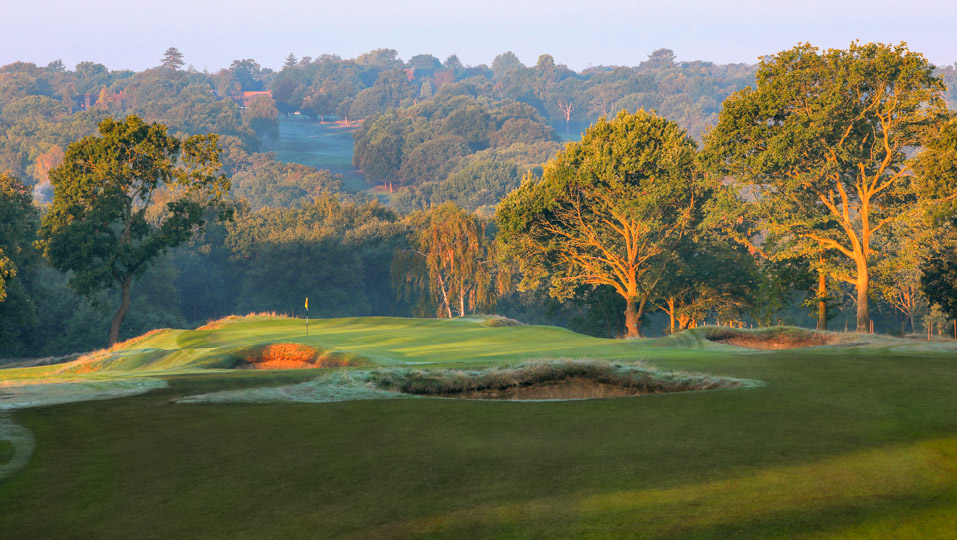
Black Mountain Golf Club in Hua Hin.

Thai Golf: Where Buddy Trips are Writ Large and Bawdy

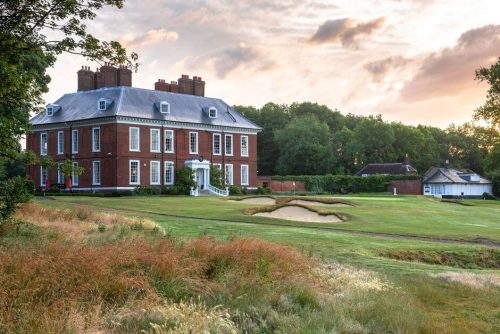
The stunning clubhouse serving Siam CC’s Plantation Course.

PATTAYA, Thailand (Sept. 5, 2017) — It’s 11 p.m. local time and my 8-man golfing gaggle is strolling down the main drag here. Pattaya’s “Walking Street” is the epicenter what most consider the capital of Thai Golf. The days and nights we’ve spent here, south of Bangkok, depart so radically from typical North American buddy trips, they make one reconsider the entire exercise.

Front and center is the golf component, of course. Normally this is the primary factor in determining quality or desirability. But there’s no denying that packs of (primarily) male golfers generally prize golfing locales for their nightlife, too. Any group of 8-12 golfing friends will include a few lads determined to rip it up each night, their wild hair perhaps offset by a few compatriots who’d just as soon play poker or watch sports in the condo. And so there is equilibrium.

Still, many insist the destination also offer some degree of lascivious attraction — if only to get the hard-partying faction on the plane. Think Myrtle Beach and its strip of nightclubs and bars. Think Vegas and its many diversions.

I consider the different buddy trips I’ve experienced, in these very locales, and I laugh to myself as another sultry Thai evening obliges me to wipe the beads from my perspiring brow. The Walking Street in Pattaya, ground zero for the city’s famously over-the-top nightlife, frankly makes an evening in Vegas feel like a evening out in Amish Country.

Black Mountain Golf Club in Hua Hin.

Blocked to vehicular traffic — save a series of small open-air trucks that continuously circle the downtown area, picking up patrons and dropping them off, for a dollar — Pattaya’s Walking Street stretches several kilometers along the Gulf of Siam beachfront. Either side of this thoroughfare is fairly well riddled with some of the craziest nightclub scenes you can possibly imagine. If you’ve never been to Thailand, you will have to imagine it — because you’ve surely never seen anything like it.

Thai Golf: All comparisons tend to pale

This is the primary take-away from my 10 days golfing across Thailand: There is such a breadth of experiences to be had that, after a point, all comparisons tend to pale.

For starters, it’s a big country — from Chiang Mai in the north to Phuket in the south it’s some 750 miles, or about the distance from Boston to Myrtle Beach. In other words, it’s too big to be climatically or culturally monolithic. This explains the striking contrast between the cool highlands of mountainous Chiang Rai, hard by the Burmese and Lao borders, and the utterly tropical environs of Koh Samui, an island off the east coast of Thailand’s tendril-like southern reach, on the Gulf of Siam.

Chiang Mai feels loose and slightly bohemian, like an overgrown backpacker haven, while Bangkok is the picture of a glittering, modern, bustling, gargantuan metropolis. Hua Hin is a quiet, gracious, retiring, seaside retreat while Pattaya… isn’t.

While the airport in Phuket accepts international arrivals from hubs like Singapore, most international visitors disembark via Bangkok, if only to go somewhere else. And so we did, immediately connecting to Chiang Mai where our early November arrival coincided with Loy Krathong, a festival marking the full moon.
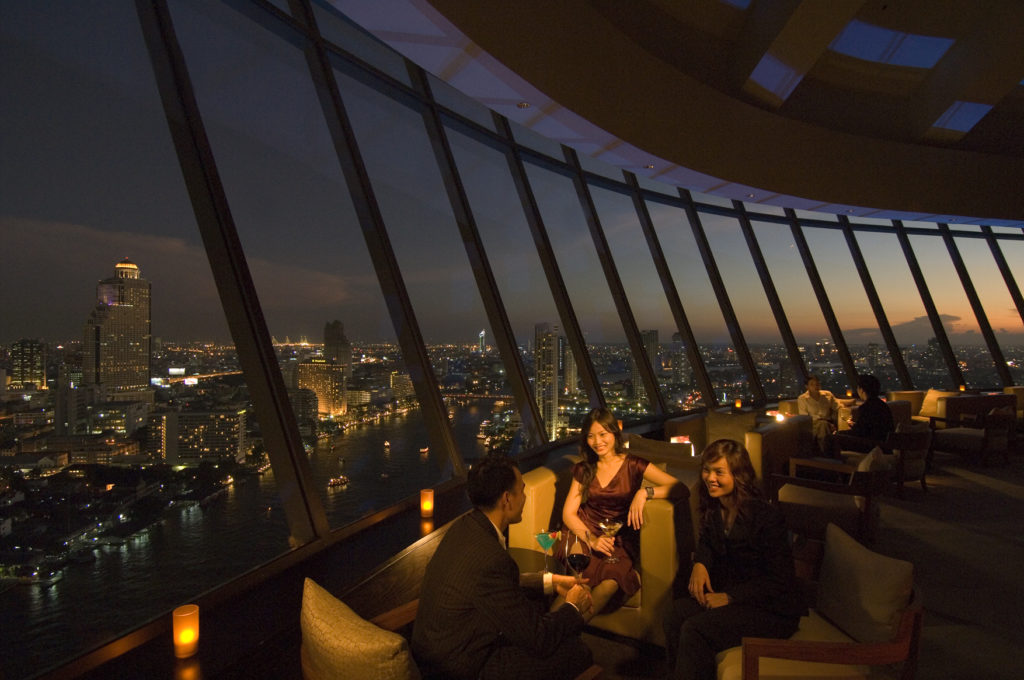
The Hilton Millenium in Bangkok.

It’s different up North

Krathongs are little cup-shaped flowers, each with a candle and incense stick tucked inside; Loy Krathong means “floating Krathongs.” Our first night in town we ate dinner by the Ping River and watched thousands of these illuminated devotionals drift past. This marvelous scene and a stupendously sweet-and-spicy Burmese-style curry made for a keen introduction to the north country.

Next day we were off to Chiang Mai Highlands, home to 18 holes designed by the America duo of Lee Schmidt and Brian Curley. The superb terrain here made their job easy, but the finer touches impress: Profuse bunkering, pleasing to the eye, frames the inside of most every dogleg. The verdant peaks in the distance, the immaculate conditioning, the dryer heat all give the impression of playing somewhere east of San Diego.

The par-5 6th at Chiang Mai Highlands.

The north is a different brand of Thailand, slower and less insistent. After a cabana attendant offered me an iced towel — these weigh stations/snack pagodas come every 4 holes or so — she clasped her palms together, as in prayer, and, smiling contentedly, nodded over them. Just 36 hours in Thailand and this gesture was already reflexive in me, so I returned the gesture — a spiritual though not religious recognition of the divinity the Thais believe resides in each of us.

At the Robert Trent Jones II-designed Santiburi Chiang Rai Country Club — an hour north, where Burma, Laos and Thailand meet to form the famed Golden Triangle — the landscape proves lush, sweeping and equally divine. The holes feel as if they’ve been cut from a jungle, and so they have. Pleasing trade winds cool things down a bit further; it looks, feels and plays like a top-flight Hawaiian track — at one-third the price.

Feels like the Big Island

Back down south in Pattaya — some 90 minutes by car from Suvarnabhumi, Bangkok’s gleeming, modernist airport — we presage our adventure on the Walking Street with a pair of rounds at 36-hole Siam Country Club, host to the Honda PTT LPGA Thailand. The Plantation Course reminded me again of Hawaii — the Big Island this time, with its huge scale and colorful purple-hued undergrowth framing the fairways — while the Old Course feels like a primo private club somewhere in the Carolinas.

That night we took in several Singha and another killer curry (green this time) before swallowing hard and heading for the bright lights.

Walking Street nightclubs run the gamut in theme and tone, from the brazenly sexual to the coyly geisha, from darkly gothic to high camp. On this night we spent 20 minutes — or the time it took us to dispatch an ice-cold Singha — watching a group of 15 topless women dance amongst themselves (with various levels of enthusiasm) on a stage flanked on three sides by stadium-style seating. It was dimly lit and the décor entirely black and red. Sorta grim.

From there we braved a small side street and happened upon a totally different sort of place: cheerful lighting, an outer space theme. Same sort of central, raised dance floor but the mood was leavened 10-fold by the presence of soap suds, trapeze bars and flexible polyurethane tubes, which the dancers playfully wielded against each other’s backsides, and those of patrons, witting or otherwise as they walked near the stage. It was as if “Josie and the Pussycats in Outer Space” had gone live action and gotten really naughty.

I don’t want to make myself out as some naïf. A great many of the patrons were on hand, as I was, for the mere spectacle. But others were clearly on the prowl. Each dancer, after all, wore a number. A mere wave of the hand would summon her to one’s table. After obliging to buy her a few drinks (thereby generating revenue for the club), one is free — or, rather, one is free to pay $50-100 — to bring her back to a motel for the evening.

The comparisons are inescapable

I was reminded of the North American strip joints that we’ve all been exposed to, at one time or another, as adjuncts to golf trips or bachelor parties or whatnot. It’s made quite clear to any patron of these U.S. establishments that nothing, and I mean nothing, is going to happen between you and the hired help. Ever. Chris Rock wrote an entire monologue on the subject that sums it up quite well: “There is no sex in the champagne room.” It’s always confused me, the allure of these places. I mean, one can stuff all the money one likes in a G-string, but she is not going home with you — and that is ironclad.

In Thailand, that stricture is removed. Utterly. It’s a bit dizzying to contemplate frankly, a bit unreal. We could debate the moral merits of this system — clear objectification vs. straightforward commerce. What strikes me is the clarity, legality and transparency of the exercise when set against the equivalent here in the states.

Whether too smart or prudish, no one in our group took the plunge in Pattaya, or anywhere else in Thailand for that matter (there are Walking Street equivalents in most every city of any size). We stumble out of the space bar back onto the teeming streets which, when I look closely, are peopled by men, women and children of two dozen different nationalities. Everyone looks to be on holiday, heads on a swivel, eyes wide. It’s more reminiscent of a circus midway than a den of iniquity. It’s an assault on your senses, each and every one.  To that end, I buy several divine, street-vended skewers of fried squid and satay chicken before heading back to the hotel with my compatriots. On the spur of the moment we decide to get a massage at one of the dozens of parlors around the corner from our hotel, the plush Woodland Suites.

Again, there are plenty of establishments in Pattaya where the word “massage” is just a device, a front — but far more deliver nothing more than the finest $8 massage you’ve ever had. An oil massage is what you’ve probably had elsewhere; a Thai massage involves no oil and can be quite a workout. After 72 holes in four days, there’s a whole lot to be said for either approach.

A Different sort of Golf Round
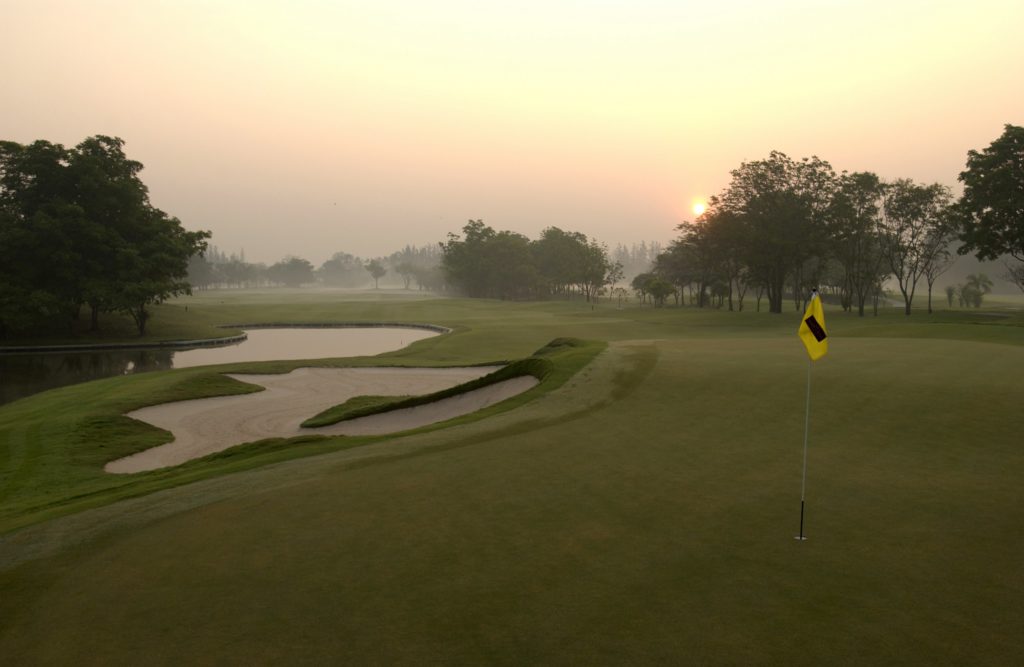
Sunrise at Muang Kaew GC, in the heart of otherwise urban Bangkok.

You’ll never rake a bunker in Thailand. In the Kingdom, that’s a caddie’s job and it’s but one benefit of the country’s utter reliance on 80- to 115-pound loopers. Yes, they’re all female and they’re a constant at every course in Thailand. Take a cart? They’ll drive it. Feel like driving? They’ll ride on the back. Walking? They’ll pull the trolley. All of this is done with unfailing courtesy and a solid understanding of the course. Club selection? I’d handle that yourself — but that’s my feeling toward caddies most anywhere.

In a place like Thailand, with its walking streets and massage parlors, the whole caddie phenomenon tends to elicit raised eyebrows from the uninitiated. But trust me: There is absolutely nothing sexual about the Thai caddie experience. For starters, despite the heat, they are completely swathed in clothing from head to toe, complete with long sleeves and gloves. Such is the standard of female beauty in Thailand: Tans are not fashionable for women, at all, and caddies go to great lengths to avoid them.

Second, they are all business.  In most cases they are far too busy fixing ball marks, putting sand in divots and raking bunkers to flirt with you.

Some of the best caddies we experienced were served up back in Bangkok at the sporty Muang Kaew Golf Club, where conditions included near-100 degree temperatures and not a breath of wind. Our caddies never wavered — until we did. My two playing partners and I ditched the back nine, paid full caddie fees, and made three friends for life. Then we went for a massage in the clubhouse, a typically sterling facility in a country where they hew to a very high standard.

Asian clubhouses in general make their American counterparts look downright dowdy. Because Thai clubhouses cater to so many Asian golfing tourists, they are borderline palatial — how else to impress the Japanese or Korean who is used to merely opulent clubhouses back home? Massage rooms are standard fare in Thai clubhouses. Locker rooms are cavernous, as each golfer is assigned a locker at no charge, as a matter of course. After the round one is expected to shower, don a change of clothes, and kick back for several hours in the bar or restaurant. It’s a damned fine ethic, if you ask me.

The clubhouse at Thai Country Club has for several years been voted the best in Asia, and it’s not difficult to see why. It has all the bells and whistles, plus a superb restaurant (yellow curry this time, with chicken-lime soup) and an epic hot tub big enough to accommodate you and 11 of your closest friends. The course at TCC is no slouch — good enough to have hosted several tour events, including Tiger’s first foray in Thailand, the 1997 Asia Honda Classic. Despite all his issues of late, Tiger remains popular here. His mother is Thai, after all, and his name remains emblazoned on locker no. 1 at Thai Country Club. At least, it was when I visited…

Never Colonized, Never Outdone

Because Bangkok is the center of Thailand’s ancient culture — a culture, a nation that was never colonized by a Western power — it is naturally home to myriad examples of impossibly grand, ornate Thai architecture, each one more elaborate and awe-inspiring than the last. I recommend taking a cruise up and down the Chao Phraya River, which affords passengers a veritable water-born palace and temple tour. The swank Bangkok Marriott Resort & Spa, where we stayed, has its own boat — the dinner cruise is not to be missed.

With all this history, and with all our western prejudices on board, it’s startling to travel around Greater Bangkok (and indeed all of Thailand) with such ease. Bangkok traffic is world-renowned, but super highways connect the entire country, a monorail runs between downtown BKK and the new airport at Suvarnabhumi, and there are all manner of cheap domestic flights. This is clearly a first world country where everything still goes for second and third world prices.

We finished our Thai journey — arranged through the tour operator Golfasian (www.golfasian.com), roughly along an itinerary comprised of resorts and hotels belonging to Golf in a Kingdom (www.golfinakingdom.com) — with a couple days in the semi-sleepy town of Hua Hin, about 2 hours southeast of the capital on the Gulf of Siam. At the turn of the last century, the Thai royal family decided they liked this place, then just a village called Samoriang. The royals authorized a railway station here and commissioned fancy Italianate hotels. Then King Rama VI hired a Scot, A.O. Robins, to design the country’s first course, Royal Hua-Hin GC.

The rest is history. Today there are 275 golf courses and some 2 million native players, a figure that places them behind only the golf-mad Japan and South Korea. Of course, the vast majority of courses in Japan and Korea are private, so where do they go on golf holiday? Thailand.

Here’s what you see as you turn in to the Anantara Resort Hua Hin.

After waking up in a tropical garden that doubles as the Anantara Hua Hin, we decamp for our final round of the trip. It’s fitting that we close it down with 18 holes at Banyan Golf Club. Not because it was voted (by Asian Golf Monthly magazine) the best new course in Asia-Pacific for 2009, but because it was designed by the Thai architects at GolfEast. And because, as is the case at most Thai courses, one is just as likely to be playing behind a group of Thais as a group of Kiwis, Finns or Singaporeans.

Banyan was laid out over a former pineapple plantation, a giant bowl-shaped plateau set in the foothills above the sea. You get a peak at the Gulf of Siam from the picturesque par-3 15th. The striking modernist clubhouse looks out over the property from a commanding perch and it’s here that my golfing companions contemplate the genius of Thai golf over these final few Singha (and yes, one last curry).

It’s the organic quality of the golf culture here that resonates, we decide. Unlike some Asian nations where golf is nothing but a modern development gambit, or others where a colonial overlord foisted golf on the culture, Thailand came to the game on its own. The Thais really do love their golf. We decide they have every right to feel that way: We love it, too.


Welsh Golf Exceeds the Hype in Unexpected, Arthurian Ways
The 11th at Royal St. David's (photo courtesy of Brandon Tucker/WorldGolf.com)

Welsh Golf Exceeds the Hype in Unexpected, Arthurian Ways

Royal St. David’s Golf Club and its singular Welsh backdrop, Harlech Castle

HARLECH, Wales (July 13, 2017) — The British Open is nearly underway and, while there are myriad reasons to visit the U.K. with your golf clubs, none of them have much to do with British Open venues. Look at Wales, located right next door to this year’s host, Royal Birkdale — to all of England, if we’re honest.The R&A has never staged The Open over this border. Still, the golf up and down the northwestern Welsh coast is outstanding. Welsh golf along the south coast ((Royal Porthcawl, Southerndown, Pennard) is even better.

What’s more, when you venture into this section of the British Isles, you experience a region so remote, so removed from modern resort and tournament conventions, that a golf journey there feels almost Arthurian.

A hefty chunk of the King Arthur legend is Welsh, drawn from early poetic sources such as Y Gododdin. Like the Welsh language itself, theses texts pre-date Roman Britain, much less Christianity. The Druids, the UK’s pre-Christian priestly class, considered the Welsh island of Anglesey sacred. This ancient, mystical aura continues to pervade the country’s dark hollows, its untamed coastline, even its trees. The Celts thought them sacred, you know.

I’m a voracious fan of the historical novelist Bernard Cornwell, whose Arthurian trilogy, The Warlord Chronicles (comprising The Winter King, Enemy of God and Excalibur) were all published about during mid-1990s. Taken together, they represent the best, most accurate and compelling take on the Arthurian tales — and much of the three-book saga takes place in Wales.

Indeed, they made a movie loosely based on Cornwell’s Warlord Chronicles, in 2004 Alas, the film — titled “King Arthur” and starting Clive Owen and Keira Knightly — proved middling at best. But they filmed all the castle scenes in Harlech.

Welsh Golf: Where Worlds Collide

Here’s an example of how this ancient world and the modern golfing world can interact in the UK’s least heralded golf destination:

About 15 years ago my girlfriend, Sharon, who would later become my wife, and I went to visit friends in Market Drayton, Shropshire, just over the Welsh border, in England, and not far from Birmingham. I was there on assignment, writing a travel piece about “where to play in the Midlands” while attending the 1995 Ryder Cup.

We can see what sort of long-term promotional effect that story had: To this day, no one talks about Edgbaston, Beau Desert or Hawkstone Park.

Anyway, we decided to head west a couple hours, over the Welsh border to seaside Harlech, home to Royal St. David’s Golf Club. I had written a letter to the club secretary requesting courtesy of the club (remember written, posted letters?). He had kindly obliged. We three arrived in coat and tie, ready for an audience and perhaps a drink in the bar before teeing off.

Ahead of our game, however, we stashed our clubs in the boot and walked a few hundred meters up the hill from RSDGC to Harlech Castle, which overlooks the course, the town and the entire countryside. Built by King Edward I during his late-thirteenth century conquest of Wales, it served as de facto capital of an independent Wales between 1404 and 1409. That’s when was held by Owain Glyndwr, the last native Welshman to hold the title Prince of Wales.

Try doing something like that within walking distance at Royal St. George’s.

Impressing the Club Secretary

Sharon was a pretty rank novice back then. She had her own clubs and arrived at the club looking pretty darned smart in a turtleneck and one of my vintage sport jackets with the sleeves rolled up (remember the ‘90s?). Still, the club secretary was dubious. I don’t know whether he suspected her inexperience (none of us were asked to present handicap cards), or he was merely a mild sexist when it came to lassie guests playing his course.

Whatever the case, he followed us to the first tee to witness our opening drives. I’m not sure who was made more nervous by this “gesture,” Sharon or myself — but she proceeded to drill one right down the middle, about 210 yards, and off we went. Come to think of it, that may have been the day I decided she was the one.

In any case, Royal St. David’s was and remains fairly sublime. The opening holes are a bit ordinary and flattish, hidden as they are behind (and not amid) the giant dunes at seaside. But the back nine rollicks through some truly extraordinary dunesland. Great stuff.

Welsh Golf doesn’t have to be — some would argue that it shouldn’t be — about resorts and tourism initiatives and tournament-enabled marketing synergies. It’s about watching your future wife stripe one, after mingling with the spirits of rebel kings and pre-Christian sorcerers in a real, live castle. Not to belabor the point, but they ain’t doing that at Birkdale.

The 11th at Royal St. David’s (photo courtesy of Brandon Tucker)

Coats, Ties and Foursomes: UK College Golf in the ’80s was a Breed Apart

Coats, Ties and Foursomes: UK College Golf in the ’80s was a Breed Apart

SUGAR GROVE, Ill. (May 5, 2017) — For all the trans-Atlantic DNA we share with our British cousins, it’s easy and, I daresay, natural to assume that UK college golf is pretty much a comp for the exercise here in the U.S. Not so. Not today, not forty years ago when I played for the University of London.

Today, top players from the U.K. (and mainland Europe) routinely travel stateside to hone their games at American colleges and universities. At scale, this “study abroad” drains the bBritish collegiate game of talent, obviously. Indeed, many of these men, women and their games will be on display here later this month (May 19-31) at Rich Harvest GC, site of the 2017 NCAA Championships.

But why do they make this trip in such appreciable numbers? Because collegiate golf in the U.K. — like all college sports there — is decidedly low-key, even compared to the low-stakes Division III golf I played at Wesleyan University in Middletown, Conn., during the early 1980s.

For my money, however, one can place UK college golf alongside proper ale and period cinema as something the Brits still do better, with more nuance and panache. Yes, our universities turn out more tour professionals, but for the majority of college golfers, in both countries, that’s not the point. It’s about competition and its sensible integration with the game’s social niceties — and no one does that better than the British upper crust.

That posh ethos dominated my university golfing experience abroad: Coats and ties, foursomes in the morning, singles in the afternoon, and no less than two proper English piss-ups sandwiched between them. You can have your vans, your matching shirts and golf bags. To Yanks, collegiate golf in the U.K. may look and feel more like a club sport. Having played both sides of this fence, I’ll go with the Pommies.

UK College Golf: No Vans

At mighty Wesleyan, a perennial golfing doormat, the exercise during the ‘80s remains recognizable: Throw on a pair of khakis and a golf shirt; pile into a van and meet a different college team, or two, at the course venue. We’d play 18 holes of medal, shake hands, tally up the scores, pile back into the van and drive home to campus. Big-time Division I golf schools don’t play many dual or tri-matches like these any more, I understand. More often they play various invitational tournaments whereby dozens of schools show up in one place, seven guys from each team play medal, and the best 5 scores count. We did this, too, though only once or twice a season.

Collegiate golf in England during the mid-1980s, when I played for the University of London, was nothing like this. Nothing. For starters, and perhaps most important, we rarely played other schools. Instead, university teams were hosted by golf clubs themselves, which trotted out their best players for a day of intergenerational match play and assorted reverie. Here’s a typical match-day regimen:

Put on coat and tie, pack some golf clothes in your golf bag and hump it to the nearest Underground station. Yes, we all got ourselves to the golf course, somehow — by bus or subway or some teammate’s car. We played a lot of matches in Greater London, at places like Roehampton and Royal Wimbledon, and I fondly remember riding the Tube with my golf clubs in tow.

Having arrived at the club, we would literally partake of tea, crumpets and scones with our opponents. As with most British golfing clubs back then, coat and tie were mandatory in the clubhouse, hence the need to dress for breakfast. The University of London Golf Team never once faced another school the entire semester I participated. We played the top 7 amateurs at various clubs who had deigned to host us for a day of matches. They were damned good players, as you might imagine, and they took great delight in showing off their home courses and, more often than not, kicking our asses around them.

The 13th at Royal Wimbeldon GC.

Thirty-six holes, Two Outfits

Our first change of address took place in short order, after tea. We’d slip into golf attire and head out for 18 holes of foursomes, or alternate-shot, at match play. This was great fun but very, very difficult. We typically see this format only in the Ryder Cup or President’s Cup contexts. Even then, a world-class professional, if just a bit off his game, can make life truly miserable for his partner. Just imagine teaming with a 7 handicap who’s probably hung-over, hasn’t picked up a club since the last match two weeks prior, and is seeing some course for the very first time.

Ater this first match, we’d change back into coat and tie for lunch. There were matches where we convened for casual buffets “at luncheon,” but more often than not these were grand affairs: four-course meals with elaborate place settings replete with wine, port and various toasts (read: shots of whiskey). If we students had fared well in the morning, the object of our hosts was mainly to get us as drunk as possible in preparation for…

Afternoon singles. Having changed back into golfing attire, we played 18 holes of singles, at match-play, of course. Depending on the luncheon miniseries, these could be quite entertaining affairs.

To complete the golfing day, one more costume chjange — back into coat and tie so as to hang around the clubhouse bar drinking pints of properly pulled ale with our new, middle-aged friends. Sometimes there were “antics”. At Roehampton (or Royal Wimbledon; I can’t remember which), someone suggested a 1-club tournament, whereby we went back out onto the course, at dusk, still dressed like Harry Vardon, pint in hand, to play a short loop of holes using but a single club. Great fun. I recall choosing a persimmon 4-wood. Remember them?

I honestly couldn’t tell you the first thing about whether we won, lost or drew any of these overall matches against the golf club teams. First of all, from a team perspective, I don’t think it mattered to anyone all that much; second, by the end of these marathon golfing days, I was far too drunk to give a fig.

The Semester’s Final Match

Oldest club in England
Royal Blackheath GC

I do remember well my last match before heading home to America, however. It was played at Royal Blackheath, which, if memory serves, is the oldest golf club in England, i.e. south of the Scottish border. We had arranged this match because a fellow on our team has been a member there growing up. He arranged it and, for him, the exercise prove equal parts homecoming, competition and piss-up.

Luncheon had been a complete free-for-all. Some two hours of eating and drinking had finally given way to the singles matches. Our Blackheath alum went out first against one of his oldest friends, while I — because it was my last match before going home, back across the pond — was given the honor of going out last vs. the club captain. He was 50-something fellow who kept offering sips from his flask all along the outward nine. I politely declined; I was plenty buzzed from lunch and wanted to win my swan song. On 12, I went 3 up and we set about finishing his brandy together.

When we arrived at the tee box serving the par-3 15th, our match nearly decided, we came upon the first group. They had decided to park themselves on a bench, wave everyone through, and concentrate on their drinking, reminiscing and needling. In the three years of college golf I played at Wesleyan, the idea that my opponent and I might blow off or otherwise back-burner our match in favor camaraderie like this? Never have occurred to us. Pity, that.

As we gathered in the clubhouse bar that evening, my teammates — in honor of my pending departure — presented me with a formal and quite stylized summary of the day’s results, complete with my skunking during the morning foursomes and my full point (!) from the singles. I’ve just gone and consulted this document in a scrapbook I keep. It was a touching gesture…

The fact that someone like me — an American, but really just a guy who showed up entirely unannounced, for a single semester — could join the golf team, compete in 5 or 6 matches, and be so thoroughly welcomed, then bade such a fond farewell. It speaks both to the informality of the collegiate golf exercise as it existed in England back then and to the oft-maligned English social character. Yes, they can be a bit stand-offish at first but once they let you in, perhaps with the aid of proper lubrication), they are great fun, quite warm and perhaps more prone to overt sentiment than we Yanks.

I don’t honestly remember how I got home from Royal Blackheath that night. My last concrete memory is playing snooker with several guys in the club’s ornate billiard room, a vast mahogany-paneled expanse beneath impossibly high, pressed-tin ceilings. cloud of cigarette and cigar smoke settled over the tables. Every once in a while, people find out I played college golf in England. They often ask, “So, what was that like?”

In a word, exhausting.

Hal Phillips, A Fine Golfing Ambassador: 1936-2011
Big Hal and Little Hal, crossing the Shannon on the way to Ballybunion in 2008.

Hal Phillips, A Fine Golfing Ambassador: 1936-2011

Big Hal and Little Hal, crossing the Shannon on the way to Ballybunion in 2008.

My father and namesake, Harold G. Phillips Jr., passed away Saturday, Aug. 27, after a 15-month battle with lymphoma, and so I’ve been thinking and writing a lot about him this past week. Most of this bittersweet rumination has nothing to do with golf but some of it surely does. He’s the guy who introduced me to the game, taught me the game, claimed to do most of his “fathering” on the golf course, and took great satisfaction in the fact that I once played the game well and have ended up making my living, to a certain extent, writing about it.

Golf differs from most sporting and recreational pursuits for its heavy reliance on venue. Unlike those playing grounds accommodating tennis, baseball, soccer, football or whatnot, golf courses are all unique and, like a fragrance stuck in the deep recesses of the mind, they summon things that other stimuli cannot. I can’t possibly remember each round I played with my dad, but if I think about where we played, the memories — some fully formed, some mere bits and pieces — come flooding back. Indeed, I can begin to appreciate and readily recall, in quite extraordinary detail, the long coincidental relationship he and I had on courses stretching from the sands and forests of New England and the Northeast, to islands in the Caribbean, to the Mull of Kintyre and Ring of Kerry. Here are a few that come to mind:

As he looked when we started our golfing adventures, in the mid-1970s.

• Powderhorn GC, Lexington, Mass.: This joint is where I started out in the game, at my father’s side. I was 8 or 9, and we had just moved to nearby Wellesley from northern New Jersey. Powderhorn was a par-3 course but that unfairly belittles it. There were 18 holes and while some were no more than 100 yards, others measured well over 200 and none were flat, rinky-dink or boring. I remember my dad and his game seemed sort of god-like back then, in that I played a lot of these holes like par-4s and -5s and there wasn’t a single hole he couldn’t “reach”. Powder Horn stood us in good stead for at least two years, and I remember playing there with my grandmother, a steadfast player in her own right (for some seven decades). I recall that I once pitched a mighty fit here after butchering the uphill 11th hole. There were tears. I recall her being sort of perturbed at my behavior but my dad, as per usual, never was… We picked up games with all sorts of people at Powderhorn — another lesson learned early: that one always invites people to join him, even when one might rather not. Made my first-ever birdie on the 17th hole there, a 130-yarder over water. We were playing with a fellow named Mr. Jolly; when that ball dove into the cup, he was nearly as excited as we were. Powderhorn is gone now, converted to a condo development in the early 1980s, which is a shame because I’ve often wanted to go back — and play it like a god.

Claiming some tournament hardware from Ken “the Hawk” Harrelson, second low gross, if memory serves (Why does it serve? because I was third!).

• Stow Acres CC, Stow, Mass.: We were public golf vagabonds, my dad and I, never belonging to a private club, at least in these early days. We played all over Eastern Massachusetts at places like Juniper Hill, Sandy Burr, South Natick CC and Saddle Hill. South Natick was just nine and survives today as a mere driving range surrounded by housing; Saddle Hill has since gone private and goes by the name of Hopkinton CC. But when we wanted to play somewhere truly fine, we ventured 45 minutes north to Stow Acres, home to a pair of really fun Geoffrey Cornish/Bill Robinson designs. They didn’t take tee times and I recall hanging around that clubhouse, sometimes for an hour or more, before finally going off. From the time I started playing until the time he turned 55, some 20 years, my dad played off anything from 7 to 10. A good player and very steady; did nothing super well but nothing at all poorly. One day at Stow North, when I was 14 or so, he went out in 33. I self-destructed at some point on the back nine, went into a funk, but managed to pull myself out of The Dark Place about the 17th hole, at which point I consulted the scorecard. “Hey dad: Par 18 and you shoot 72!”

“I know!” he shot back, clearly wishing I had continued to pout and leave him alone with his demons. He made that par and I’m pretty sure it was his best round ever, though I know he shot 73 in competition a couple times during high school matches at Fort Monmouth CC (I’ve seen the newspaper clippings). He had a great story about the one year he played collegiately, at Lehigh University. He scrabbled his way onto the varsity as the 8th and last man for a match at Penn State, apparently, and managed to put together a 79. The guy dropped 71 on him. “The 8th guy! And it could have been 69!” he would later explain, still amazed that there were seven Nittany Lions better than that. Thereafter my dad resolved to concentrate on his studies.

Rocking the Merion 1981 U.S. Open hat, as he would for many years.

• Pleasant Valley CC, Sutton, Mass.: My dad and his business partner, Harvey Howell, owned a polystyrene manufacturing operation south of Worcester, Mass., and they commuted an hour each way from Wellesley and neighboring Dover, every day, my whole growing up. There wasn’t much great golf to be played out that way, not back then. But there was Pleasant Valley, which for years hosted one of only two PGA Tour stops in New England (the other was The Greater Hartford Open, now The Travelers; PV hosted its final Tour event in 1998). So, while it was no design masterpiece, Pleasant Valley was sort of a big deal club among golfing Massholes. Because my dad was a local business guy of some standing, he could arrange games for us there. He arranged a lesson for me at PVCC, too, the only formal one I ever had as a kid; the teacher was Rick Karbowski, quite a good player out on satellite tours back in the early ‘80s… I played a match there once in college, vs. Assumption College. I was playing no. 1 for Wesleyan that day and drew a guy named Frank Vana, who would go on to win a bunch of Mass. Amateurs. We were dead even on the 12th or 13th hole when I spied my dad walking along the fairway; he had snuck away from the office, just a few miles down the road. I remember being pleased he was there, though I promptly doubled the next hole and bogeyed two more. My dad had played enough golf with me to know what sort of volcanic response was coming. He got out of there pretty fast.

I had all sorts of blow-ups like this as a kid, as a young adult… okay, as a full-on grown-up, too. My dad’s temperament, on and off the golf course, is really nothing like mine. A very mellow dude, he was. The worst he would ever say after botching some shot was, “Oh, Hal…” He was surely embarrassed sometimes by my behavior but he never really called me on it, beyond a quiet-but-stern, “That’s enough now.” When I heard that, it was time to pull myself together.

• Pine Valley GC, Clementon, N.J.: When one serves on any sort of course-rating panel, the inevitable question is whether one has played Pine Valley. Thanks to my dad, I’ve played it twice, both during my college days. He had business contacts at Dupont, and whoever it was (Hugh something?) invited us down during the fall of my freshman and sophomore years. They have a bet there, at the other PVCC (!), as you readers may know, that guests can’t shoot within 10 shots of their handicaps. I never came close to cashing in. My dad won that bet twice. In his day, he could shoot 84-85 pretty much anywhere. This was pre-cell phone, of course, and it would’ve been quite bourgeois to bring a camera, so no pictures exist to mark

At The Equinox in Manchester, Vt. After he had arranged so many games for me, at places like Pine Valley and Merion, it was nice to arrange them for him.

our visits. But I do have the paper placemat (a nice map of the layout and scorecard) from our luncheon, which I framed and have hanging in my office. One of the years we played Pine Valley, it must have been the first, we followed up the round with another just a few miles west, in the Philly suburbs, at Merion. This was only a year or so after David Graham’s win there at the 1981 U.S. Open. My dad closed me out on the 16th hole, the famous Quarry hole, where I four-putted, snapped my putter in two and left it in the little waste-basket below the ball-washer on 17 tee. I parred in, putting out with my 2-iron. We were not invited back… However, the Merion legacy proved long-lasting: My dad picked up a commemorative U.S. Open bucket hat there, and he would wear it for years on golf courses and soccer sidelines far and wide (see image of that above: white with a blue band). The entire time I knew him, my dad had a head of hair not unlike Albert Einstein’s. And so he always wore a hat on the golf course or anywhere the wind might make for unreasonable coiffure-maintenance. He rarely wore baseball caps, always some sort of bucket hat with the brim turned down on all sides. Before he procured the Merion model, he had a green one that he wore for years (see that model further up in this story). I dabbled with it for a time. Wish I knew where that thing was… In later years he went to the wide-brimmed straw model — see the lead image for an example of this mode — which my mother never liked. Half in jest, she claimed made him look like a fruit vendor.

• Old Orchard CC, Red Bank, N.J.: This was the course my dad grew up on, where he learned the game at the knee of the pro there, George Sullivan. My grandparents would play with my dad, along with me, and they’d often marvel that he still had “that same, smooth George Sullivan swing.” It was indeed smooth, quite effortless. He never, ever overswung (unlike some of us). Of course, my dad also learned the game from his own father, my grandfather, Harold Phillips Sr., in his prime a high single-digit player in his own right,

That smooth George Sullivan swing, circa 1952

a lefty who had a penchant for aces. Poppy would post 5 or 6 over the course of his many golfing days, at least two while he lived at Shadow Lake Village, a N.J. retirement community with a par-3 course. I remember going to visit there as a lad, by which time Pop had become a bit dotty. He was bragging to me on a hole-in-one he’d just made and I looked over at Gram with circumspection — “No, it’s true,” she exclaimed. “He had another one!”… In any case, one time during the late 1980s, my dad and I went back over to Old Orchard; it had been decades and he really got a kick out of going round there again. He had caddied there, too. Apparently there were several gangland figures whose bags he toted in the 1940s and 50s. Good stories were related that day. Plus I shot 76 and totally torched the Old Man on his own turf… I would love to have gotten him back down to the Jersey Shore in later years to play Hollywood GC in Deal, which is supposed to be a great old Dick Wilson design, recently restored, and where Pop had been a member in the 1930s. Thereafter we’d have scooted west across the Pennsylvania border, on Route 22, to play Saucon Valley, Lehigh’s home club, where my dad hadn’t played since college. But we never did find the time. File that one under “Regrets”.

• Nehoiden GC, Wellesley, Mass.: This is the 9-hole, private club across the street from which my family lived for 20-odd years. It’s owned by Wellesley College and while it’s nothing stupendous from a design standpoint, it was notorious in the 1970s and ‘80s for having a 10- or 15-year waiting list. Why? Membership was open to college faculty and staff, to folks who worked for the Town of Wellesley, and it was cheap compared to the swanky clubs all around us (Wellesley CC, Woodland GC, Weston GC, Dedham Golf & Polo, Brae Burn CC). The first 10 years we lived in the chocolate brown Victorian across the street, my dad didn’t gain membership at Nehoiden. He didn’t really play the course at all. However, I played the course ALL THE TIME: My friends and I would sneak onto Nehoiden constantly, in addition to playing in the sprinklers there on hot summer nights, looking for golf balls, sledding, playing hockey on the 7th fairway, and generally treating the place like our own personal playground, which, from sundown to sun-up half the year, and 24/7 the rest of the year, it was.

Oddly, when my dad did become a member, in 1983 or so, he

My ace, recorded at Nehoiden 7.16.90 … The poor man was witness to several but never had one himself.

started playing a golf course that he hardly knew — but his sons knew intimately.

My dad was sort of shy socially and by that I mean he didn’t seek out social situations. Once in them, however, he was famously genial, almost courtly (a quality his NOLA-bred father exhibited in spades). So it’s no surprise that he became an active and, I think, extremely well liked figure across the street. He served on committees and enjoyed regular games with different sets of guys; he was a sought-after partner in the various scotch foursome events — because he was courtly, because he would never make a woman or any lesser player feel badly about being lesser, and because he played off 7. Though I had a big head start on him, the universe of our shared experiences at Nehoiden would prove vast. We were together there the first time I broke 80; the time he pegged that car crossing the 9th fairway; the time I aced the 4th hole (my only hole-in-one; the poor man never did post one); the many times one of us would hit what appeared to be a perfect, blind approach on 6 only to see the ball bound back into view after hitting the unforgiving pavement on Route 16; and the time he came closest to winning the club championship — finishing second, with me on the bag for the final round… He let his membership lapse over this past winter, as he didn’t think he’d be well enough to play. My brother and I called the Nehoiden powers-that-be in June, seeing if we could arrange what had become our regular Father’s Day game. They bent over backwards to make that happen, even hooked him up with a riding cart (which are banned at Nehoiden), something for which we remain eternally grateful. It was the last time he set foot on the property… Until we sprinkled his ashes in the bunkers surrounded the 8th green.

• Western Gailes, Ayrshire, Scotland: For all his travels, my dad was 60 or so before he ever played golf in the U.K. My brother Matthew and I sorted that, in 1998, when we arranged a mini-tour of Scotland’s west country: Gleneagles, Turnberry and Machrihanish. However, our very first game took place at Western Gailes, and it stands out for me because 1) it really was an eye-opener for the man, walking and playing amidst the dunes as opposed to watching them on TV during the British Open; and 2) my dad, for all his wonderful traits, was one of the slowest men on earth. I’m not talking a slow golfer,

Stalking a putt at Machrihanish in the late 1990s.

which, to be fair, he surely was. Physically, he did everything slowly and deliberately. This just naturally spilled over into his golf game: always the last one to his ball; never altering his pre-swing routine or undertaking it before it was his turn to play (partly because he was so frequently the last one to his ball); always coming over to look for your ball, but often disappearing into the woods/rough and having to be coaxed out. Surrounded by Scots, his game proved positively glacial. We had prepped him on this, telling him we had to keep the pace good, that there would be precious few if any yardage markers, and, of course, no riding carts. I remember walking up the first fairway at Western Gailes and there was my dad, behind me, standing over the ball, looking around: “What do you think I’ve got from here?” Dad, there are no markers! Eye it and hit it. Of course, he continued to ask this same question over and over, throughout the trip, never registering the new reality. During some later round, when I was just finished admonishing him yet again to move his ass — and to stop asking me where the the non-existen 150 marker was — I turned to my brother and said, “You know what? I sound just like mom.”

• Lahinch GC, County Clare, Ireland: In retrospect, the timing on this trip couldn’t have been much better. In 2008 my dad was 71 and, so far as we knew, in pretty good nick. But even in fair health he’d arrived at the stage of life where walking four rounds in 4 days was too much. And little did we know that in less than three years, he’d be gone. So, this trip to Ireland was a godsend and we made the most of it (see video capsule from that trip below). The round at Lahinch was our first, the one we played fresh off the plane, in brilliant sunshine and 70-degree weather, with one set of rented clubs (my brother’s had been misplaced by the airline), around one of the peerless links on God’s green earth. It’s not fair to single out Lahinch at the expense of our rounds at Doonbeg, Ballybunion and Tralee; they were lovely all four and we even wangled a buggy for dad at the latter. Indeed, the day before he had been able to walk only 14 holes of Round III, at Ballybunion. We met him that day back at the clubhouse where he was chatting up a group of fellow Americans in the bar, pint in hand, grinning ear to ear. “This Guinness is really pretty good,” he said. My God, Dad: How old are you? You’re just figuring this out? … Not much of a drinker, my dad.

I remember asking him once — when I was quite grown-up, working in the golf business, and ever more curious about courses, design and travel — exactly where he had played his golf when we’d all lived in northern New Jersey. This would have been the early 1970s, before we moved to Greater Boston, when he was still in his golfing prime (30-35 years old) but when I, his eldest son, was too young to play with him.

“Oh, I didn’t play much of anywhere really.”

What do you mean?

“Well, I had a wife and kids and a job. I didn’t play much at all until you were old enough to play with me.”

USA v. Mexico: Americans exposed at the back
Pablo Barrera (left) scored two and Gio Dos Santos sealed the deal in Mexico's 4-2 win over the U.S. last weekend.

USA v. Mexico: Americans exposed at the back


Pablo Barrera (left) scored two and Gio Dos Santos sealed the deal in Mexico’s 4-2 win over the U.S. last weekend.


Behold, the Unsightly American Soccer Podcast for the week of June 27, 2011. The Gold Cup has concluded, and the Mexicans, by virtue of their 4-2 victory, have laid claim to biannual honors as top dog in CONCACAF. This is our Federation, of course, the agglomeration of North American, Central American and Caribbean countries that holds a World Cup Qualifying tournament every four years, and every two years conducts its own championship, The Gold Cup. It’s nearly always held here in the U.S. — we’ve got the stadia, the corporate backing, the ease of travel, etc. But Mexico’s got the fans. Of the 100,000 who packed the Rose Bowl Saturday night, June 25, for the Gold Cup final, 80,000 were in green. Tom Wadlington joins your host Hal Phillips to pick up the pieces. Tom strays, as he often does, into some Fulham FC talk at the close of our discuss. This serves aptly as preview for Part II of this UASP, wherein we talk to Spencer Robinson and Stephen Myers re. matters Euro. But for now, enjoy Part I…

2011.06.25 UASP


World Cup Nostalgia: Ultimately, it was televised

World Cup Nostalgia: Ultimately, it was televised

The inimitable Archie Gemmel, on the rampage against Holland in 1978.

Like the Olympic Games, the World Cup comes round but once every four years. Unlike the modern Olympiad, the World Cup has only recently attracted the exhaustive attention of television programmers, a fact driven home to me by my friend and colleague, Dieter Schmidt, in his debut column at halphillips.net. There was indeed no international soccer on U.S. television in the early 1970s (before Dee got a bit too stoned and spent the next 32 years frozen in a northern Manitoba trash heap). Indeed, the World Cup final — the most watched sporting event the world over — was not televised live in America until 1982, and each game of the tournament was not available on TV until ESPN undertook the task for the 1994 games, staged here in the U.S.

The United States’ thrilling last-minute victory over Algeria on Wednesday was testament to the overwhelming power of the shared televised sports experience. My fellow podcaster Tom Wadlington and I watched at DiMillo’s Bayside, a nice little sports bar in Portland, Maine. It’s not every day that two strangers leap into my arms while screaming with unbridled joy, as happened when Donovan buried the winner. It’s the latest in a series of World Cup TV Memories that I will take with me always.

I have fairly visual, broadcast-enabled memories of each World Cup starting with 1974, some more vivid and complete than others. Catching a World Cup match pre-1994, even a final, took some real doing, some planning. Here’s the first in a two-part rundown of how I managed it.

1974: West Germany

I don’t know who the chick is, but that’s Hubie, at right, just as he looked in the 1970s.

I grew up playing for the Wellesley United Soccer Club in suburban Boston, and club wide for many years our uniforms were, for reasons unknown to me, a fairly exact copy of the German national kit at that time: white socks, black shorts, white shirt with black piping. So, we had a kinship with the Franz Beckenbauer, Paul Breitner, Gerd Muller teams of that period. One of my very first coaches, in fact, Mr. Krause, was a German national whose son, Dirk, would fling himself about the goalmouth during practice making saves and yelling “Sepp!”, in honor of the Mannschaft’s imperious, talented keeper, Sepp Maier. Even so, while I knew the Germans had won the 1974 World Cup, I didn’t see the final until 1977, when I attended the Puma All-Star Soccer Camp — run by another Teutonic type, one Hubert Vogelsinger, an Austrian national who, rumor had it, had been banned from his native soccer community (and emigrated to San Diego) after head-butting a referee during a match in Vienna. In any case, Hubie showed films every night after running us ragged all day long. He was understandably Germanophilic and it was there, in the Taft School cafeteria, in Watertown, Conn., seated beside my Wellesley roommate Mike Mooradian, that I finally saw the 1974 final, in its entirety: Holland with its kick-ass Orange uniforms; both teams with their amazingly long hair and mustaches; Holland’s 15 consecutive passes to start the game, culminating in a penalty and converted spot kick by Johann Cruyff to put the Dutch ahead 1-0 — before the Germans had even touched the ball (!); Breitner’s PK to tie the game; Bertie Vogts dogging a sub-par Cruyff the rest of the game; and the Germans’ ultimate 2-1 triumph, with Franz raising the trophy overhead two-handed. There was a great deal of slow-motion included in the game film, an effective motif for the game action but also for visceral reaction shots of these impossibly hirsute Germans, who very much looked the part of marauding Visigoths. Even three years late, it was impossibly exotic and heroic.

1978: Argentina

Just a year later, I returned to Hubie’s camp and, if I’m not mistaken, we saw the ’74 final again one night. But we also saw a highlight reel of the just-completed World Cup in Argentina. This made less of a lasting impression, maybe because we only saw snippets from the tournament. I remember Mario Kempes on a mazy run and scoring a goal in extra time. Was it the second goal in the 3-1 Argentina victory, or the third? Who knows? … I recall a hail of goals from Argentina in a 6-0 drubbing of Peru. Only much later did I learn that this was a match Peru and its Argentina-born keeper were accused of throwing, to put the host country in the final at Brazil’s expense (back then, teams qualified for the final directly from group play; confounding)… And then there is Archie Gemmel, the Scot who scored one of the great goals in British football history vs. the Dutch in some group game. Scotland won the game but didn’t advance out of the group, while Holland went to the final. Still, Gemmel’s goal was so sublime, it’s the highlight from 1978 I remember best — maybe because it remains so talked about and, thanks to the Internet, ubiquitous. Check it out on youtube. You won’t be sorry.

1982: Spain

This was a big deal, seeing the game live. I watched it with my high school girlfriend, Renée, at her parents’ house. There were breaks for advertisements, but I don’t recall that being controversial at the time. Not to me. I was American. I couldn’t yet conceive of a sporting event that didn’t accommodate such interruptions.

1986: Mexico

I watched this game at my house in Wellesley, and I have to admit that I don’t recall anything about the game or the event that was particularly memorable. Just graduated from college and spending the requisite jobless downtime at my parent’s place, no doubt I was stoned at the time.

1990: Italy

A few years ago, my friend Dave called and asked me a cryptic question.

“Remember that time I came over to your house in Watertown and we watched that World Cup game?”

Um, yeah…

“Well, what day was that?”

What do you mean, ‘what day’? It was June 1990; I don’t know the exact day…

“Oh. Okay…”

Dave, why do you want to know this?

“Well, we ordered cheeseburger subs from that place, and I’ve just realized that was the last time I ate meat.”

Well, thanks to the Internet, now it can be told. Dave last ate meat on June 25, 1990, the same day Romania eliminated Ireland on penalty kicks in the Round of 16. I remember quite a bit from that day, and that tournament. Not every group game was televised, on ESPN, but every knockout game was. For a soccer nut who was getting only the semi-finals and finals up to that point, this was Nirvana. At the time, I was 26 and working as city editor at a daily newspaper, which meant I didn’t go to work until 5 p.m. As Italy was 6 hours ahead I could get up and watch World Cup matches all day long before heading to the newsroom. Fabulous.

One more delicious note from 1990: “That place” was The International, a fabulous pizza and sub shop that delivered — and delivered to my address with great frequency. That same day that Dave at his parting cheeseburger sub, I was in the shower and he was in the kitchen doing something when the delivery guy, Ahmed, walked in without ringing the doorbell, as was his custom. I was a regular customer; we had an understanding. With Dave looking on, Ahmed proceeds to set the food on coffee table, sit himself down in front of the television set and take a hit off the bong that was a fixture on said coffee table in that apartment. Dave, who knew nothing of our understanding, was understandably taken aback and hid in the kitchen until I emerged from the bathroom. I’ve always loved that memory, and was only too happy to add the cheeseburger sub aspect.

A Tale of Two Soccer Melting Pots


By Dee Schmidt

One of the things you need to know about me is that while I’m counter-cultural and an American through and through (you can be both, my brothers and sisters), my paternal ancestry is seriously Teutonic. Dig: My dad was Austrian and because the heyday of Austrian football came in the 1930s — bet you didn’t know Das Team finished 4th at the 1934 World Cup, and runners-up at the ’36 Olympics — his loyalties and interest (and mine, by extension) naturally shift to the Germans, who, even critics will allow, are totally outta sight when trophies are at stake. The finest tournament performers in the history of world football, I reckon.

The other thing you need to know about me, if you don’t already, is that my soccer experience was interrupted in 1973 by the 32 years I spent in a weed- and ice-induced state of suspended animation (see details here: The Story of Dee).

So it’s with great interest that I follow both the American and German teams at the World Cup now underway in South Africa — not just because I have national rooting interests, but because the make-up of these teams today is nothing as I or any other self-respecting football-freak would have expected them to be in the early 1970s.

I watched the Germans roast and pluck the Australians on Sunday, 4-0, and the result wasn’t nearly so mind-blowing as the German roster: Two Polish-born goal scorers (Miroslav Klose and Lukas Podolski), backed by a withdrawn striker of clear Turkish origin (Mesut Özil) and a defensive midfielder named Sami Khedira, who was born in Stuttgart to a father from Tunisia. The two strikers who came on? Why, naturally it was a fellow named Mario Gomez (father: a Spaniard) and Cacau, who did what Brazilo-Germans are supposed to do: score on his first-ever World Cup touch.

In my day, Die Mannschaft was the whitest, most purely German thing in the country. I’m not about to use the word “Aryan” to describe it, but the national team was a clear reflection of a very white, quite homogenous country. This has changed, and viva la difference, to quote a famous Alsatian (!).

Team USA also features a diverse juxtaposition of flavors, colors and textures. But I have to say, 36 years ago it was an accepted fact that, eventually, the country’s Latin flavor would come to dominate the game here in America. I’m from San Diego (Encinitas, to be exact; my colleague and blood brother Hal Phillips likes to call me “Encinitas Man”, after some movie about a once-frozen cave man) and we could see it happening even in the early 1970s.

So, I’ve gotta ask, what happened?
I look at this team, and though I marvel at its overall skill and athleticism (I really do; the progress we’ve made as a soccer nation makes the hair stand up on the back of my neck), I’m frankly perplexed by how few Latin players are in the team and how Northern European the American style of play remains.

In my day, American soccer was very direct, very straight-ahead, very aerial. And this could be credibly explained by the fact that most of the foreigners coaching American kids back then were British or German. But it would appear that not much has changed. The American style remains Northern European. One look at either of the Mexico-USA World Cup qualifiers shows how much the Mexicans want to hold the ball, and how quickly the Americans want to get rid of it, up the field, in the air.

More pointedly, where are the Mexican-Americans? If the bleats of politicians in Arizona are to be given any credence, should the U.S. roster not be peppered with Latino kids who grew up playing in California, Arizona and Texas?

Carlos Bocanegra from Upland, California, just north of L.A.? Check.

Herculez Gomez? No doubt.

Jose Francisco Torres? Yeah, I think so.

Ricardo Clark? Nope. His dad’s from Trinidad.

Benny Feilhaber? Another Brazilo-German.

Jozy Altidore? Of Haitian descent.

Clint Dempsey? He’s from Nagadoches, Texas, but he ain’t Latin and neither is his style of play.

I’m not saying the USMT isn’t a melting pot. It is.

And I’m not saying that there should be some sort of Latin quota.

It merely strikes me as odd that with so many Mexican-Americans in America, our national team program has not tapped this rich vein of talent more markedly. We used to say that when it does, American soccer will develop a unique hybrid style that is not just its very own, but very difficult to beat. But if it hasn’t happened by now, one wonders when and whether it will.

Defrosted Retromensch serves up pre-WC punditry


By Dee Schmidt

Hello, world. I’m from the ‘70s and if you’re reading this, you’re probably not. So bear with me, future dudes. I’ve spent 32 of the last 36 years frozen solid, biding my time at the bottom of an ever-expanding trash heap on the snow-white shores of Hudson Bay. I’m from Encinitas, man. There’s no way I should be alive! But Dee lives, he still breathes the game, and he’s holding forth on the World Cup thanks to his righteous new sugar daddies at The A Position, who’ve asked me to blog my way through the world’s greatest sporting spectacle.

Lookit: Four years ago, Dee didn’t even know what a blog was. Or a “personal” computer. Or the Internet. And I’m still learning — still trying to get my head around this Net thing: Was all this information always up there, just floating around in space?

You know what? Nevermind. I don’t care. I love the Net, for no other reason than Dee can follow Bundesliga matches as they happen, or get Serie A results the same day! And here’s another reason: Anyone can dig my backstory by just clicking on this colored, underlined “link” bit here (The Story of Dee).

Trust me, this was not possible in 1973. Not even close. In 1973, that was a sausage. More to the point, do you realize what Dee had to do, back in the day, to check on the Scudetto? Either I had to call my dad’s brother in Salzburg (Horst knew everything about European football), or Dee had to hump it up to Long Beach and buy a London Times at this special ex-pat newsstand on Alamitos.

Forget television. Do you realize that during the 22 years of my former life, Dee never ever saw a match on TV? EVER. I’ll never forget the night some four years ago, fairly soon after my thaw, when I’m flipping through the gajillion channels at my buddy Proo’s pad. He grabs the remote and shows me to a station that broadcasts nothing but soccer. God praise Fox Soccer Channel! … I gotta tell ya, the adjustments to 21st century life have been many. But Dee likes it better this way.

Besides, uncle Horst is dead. Hell, my parents are dead, too, and I never got the chance to say goodbye. Most of my old friends are unrecognizable to me: married, married-and-divorced, parents, even grandparents. Some of them still follow the footy (like Proo, who zoinked majorly when I showed up at his place in La Jolla; he’s a BANKER, man! But we watched a Bundesliga match on his FSC and we zoinked at the kits. Well, I did. More on that later). But in every other way I’m basically unrecognizable to Proo, too. Dee’s a 58-year-old, ice-aged panel-head with a 22-year-old brain, a head of hair that’s going gray at a bitchin’ rate, and the palest, saggiest damned skin you ever saw (apparently, one’s natural elasticity and melanin count tend to suffer after three decades in the freezer. It’s true — I read it on the Net.).

So that’s my story, dig? It’s a sad and bizarre tale in many ways but I’m glad my mother, a writer herself, made me keep a diary all those years and steered me toward a journalism gig at San Diego State. I’m loving this iMac thingy. It’s good therapy for me, and it’s helped me realize it could’ve been worse: Dee could still be sleeping with the fish heads in Churchill, or they coulda dug me out this summer and I’d have missed another World Cup.

In the meantime here are some initial observations on the state of the soccer world leading up to South Africa 2010 — and the world at large — issued by yours truly, the Retromensch, one of the only pentagenarians on Earth totally untouched by disco. I’ve heard this shit, man; what were y’all thinking?

•••

• Much has changed since 1973, but Dee has to say it was a comfort to see certain fashions, which arrived and thrived during my previous life, have endured uninterrupted to the present day. Bell-bottoms and butterfly collars, for example. You wouldn’t believe the shit I caught for making that fashion move in the mid-‘60s, when pants were still pegged and collars buttoned-down. Now that I’m a dirty old man, I can agree even more strongly with my younger self that nothing flatters the female form like a pair of hip huggers, man (nothing with long pants anyway). Another look clearly built to last: mutton chops. When me and my boys grew our sideburns out in high school, we thought we were on to something BIG. But we never dreamed it would stay so big for so long.

• Football fashion? That’s another story. What’s with the clown pants, man? Y’all look like the second coming of Ferenc Puskas. That’s a look older than I am – baggy shorts down to the knees went out with over-the-ankle boots. Give me Gerd Mueller in a pair of proper shorts any day. I will say, future dudes, that y’all are onto something pretty groovy with some of these national team kits. I watched Cameroon and Ivory Coast plays some African Nations Cup matches in February — psychedelic!

• In 1973, there were two Germanys, East and West. Now there is just one. In 1973, there was this wall, see? Not anymore, I gather. This is basically a huge freak for a dude of my latent vintage, but it’s all well and good. My dad was Austrian, but he’d have been well chuffed that the Germans got their act together politically, and that Austria successfully co-hosted the last European Championship, an event I was privileged to watch (even if the side looked fairly inept). My dad might have gone with me to West Germany in ‘74, had the Austrians qualified, but they didn’t. Neither did England, a fact that rocked the soccer world in 1973. Trust me, it did. They had won it all only eight years before and brought a wonderful team to Mexico in 1970. England’s failure to qualify in ’74 hung like a pall over the pre-tournament atmosphere… Get used to my continual references to West Germany 1974. I understand that eight WCs have since come and gone, but that’s my last, pre-frozen point of reference and you’ve got to recognize that my whole life was leading up to that tournament, man. And Dee missed it!

• George Best is dead? Okay, but here’s my question: It only just happened? Sad, and apparently I missed his stint in Southern California with some NASL outfit called the Aztecs (?), but even based on what I knew of George Best, i.e. leading up to 1973, I’d have put the over-under on his liver giving out at around 1986, 1990 max.

• Okay, in this first column I’ve saved the best for last: Nothing warms my defrosted heart or bends my flower-power brain more than the fact that America will be participating in its sixth consecutive World Cup finals this month. Fuck the Berlin Wall. This development is truly earth-shattering, to me anyway. Never in his wildest dreams did Dee think this was possible. I’ve seen most every U.S. international over the last four years and the class of soccer we’ve mustered is, well, mind boggling. If you were suddenly transported back to 1973 (sort of like my own experience, in reverse), you’d understand what leaves me so gob-smacked. But the thing that really sends chills down my arthritic spine is the fan support. The crowds, man! American crowds! Thousands upon thousands turning out to see proper football — in the United States of America!

In August 1973, I saw the Americans play Poland in a friendly up in the Bay Area. We lost 4-0 and there couldn’t have been 200 people there. I hope you realize just how far y’all have come — how far we’ve come! I watch Landon Donovan and think surely he’s some Irish national who just been naturalized. But he’s an American, from L.A., and that dude can play. The quality and pace of Michael Bradley, of Stuart Holden, of Jozy Altidore — the physical specimen that is Oguchi Onyewu… For a dude whose standard of excellence had been Kyle Rote Jr., whose last pair of new boots were 1971 Puma Apollos (seriously!), it’s a bit overwhelming. But I’m adjusting — to everything but the shorts.

Soccer’s own Encinitas Man to contribute WC 2010 reports


The curious, inspirational story of Dieter “Dee” Schmidt first came to the soccer world’s attention some four ago when his frozen but otherwise well preserved body — clad in nothing but a vintage Paul Breitner Bayern Munich jersey, impossibly bell-bottomed jeans and a pair of antique adidas Sambas — was recovered, thanks to a freakish January thaw, from a towering ice and garbage heap on the outskirts of Churchill, Manitoba, Canada.

Still encased in a sarcophagus of blue ice, Schmidt’s corpus crystalline was quickly air-lifted by provincial authorities to St. Anne’s Medical Center in Winnipeg, where doctors discovered his heart still functioning at some 3 beats per minute — less than half that of a black bear in hibernation. Incrementally, over course of two weeks, Schmidt’s body temperature was increased. Intravenous nourishment was introduced on Day 10, and for another week thereafter he was placed in a medically induced coma to avoid further metabolic complications.

Schmidt awoke from his coma Feb. 6, 2006, and later that day was chatting amiably with doctors — about his admiration for Johann Neeskens, his plans to attend the upcoming World Cup in Germany, and his regret that England had not qualified. When told by a soccer-informed orderly at St. Anne’s that England had indeed qualified for that summer’s World Cup, besting Poland to win its group, Schmidt pointedly differed. “Dude, you’ve got it backwards,” he was reported as saying. “Poland qualified at England’s expense. I listened to the BBC broadcast myself, on my bud’s ham radio.”

Of course, Poland had qualified instead of England for the World Cup — the 1974 World Cup.

The tale Schmidt eventually told of his postponed demise continues, some four years on, to stun the North American medical community while fascinating hardcore football fans worldwide. Schmidt claims to have traveled to northern Manitoba from his native San Diego in December 1973, via Toronto, to attend the Inuit Futsal Invitational, an obscure event on Canada’s indoor soccer calendar during the mid-1970s; the event was last held in 1978.

According to reports in the Winnipeg Star-Journal, Schmidt recalls venturing out of doors one evening to “smoke some grass” with members of a visiting club from Vancouver following Burnaby FC’s win in the tournament semifinal. That’s the last thing he remembers, though Schmidt claims the cannabis to have been “wicked potent” — potent enough, he surmises, to have put him to sleep in a nearby snow bank.

Star-Journal research on the Inuit Futsal Invitation shows the ‘73 final to have been postponed 24 hours due to a heavy winter storm that dropped more than two meters of snow on Churchill in less than 18 hours.

Schmidt would be reported missing in January 1974; archival records kept at the San Diego County Sheriff’s Office show a series of inquiries and all-points bulletins related to Dieter’s disappearance — including a formal provincial inquest conducted in Toronto, his last known whereabouts — but the case was officially abandoned, unsolved, on July 11, 1982, the same day Paolo Rossi scored the last of his Golden Boot-winning six goals in a 3-1 win over West Germany, earning the Italians their first World Cup.

•••

Schmidt asserts (and Star-Journal investigations have confirmed) that he was born on July 12, 1952 in Long Beach, Calif., the only child of Franz Schmidt (an Austrian national and president of the Hubert Vogelsinger Fan Club/Encinitas Chapter, 1972-81) and Helen Fahey Schmidt, a novelist and native of Long Beach.

Mr. Schmidt died of a heart attack following Austria’s elimination from World Cup qualifying, 0-3 to Hungary, on April 17, 1985. Mrs. Schmidt passed away in 1992, of natural causes.

By his telling, the first 21 years of Dee’s life reveal him to be his father’s son, a middling player but an enormously committed fan who, despite the underdeveloped state of American soccer in the 1960s and ‘70s, lived and breathed the beautiful game and traveled the breadth of North America to see it. He claims:

• to have attended, with his dad, the 1967 United Soccer Association final at L.A.’s Memorial Coliseum (“A classico, man. Wolves [Los Angeles] beat the Whips [Washington] in OT, 6-5, on Ally Shewan’s own goal”);

• to have witnessed Pele’s U.S. soccer debut (a 1-0 Santos victory over A.C. Milan, in Boston, part the Rossinieri’s four-match tour of the U.S. in June 1970 — “Milan lost all four games of that tour, dude. It was sad.”);

• to have traveled to St. Louis in May 1972 to watch the U.S. Olympic team beat Jamaica, 2-1, earning the Yanks’ first Olympic berth since 1960.

Then a sophomore at San Diego State University and completely tapped out, Dieter couldn’t swing a trip to Munich for the 1972 Olympic finals — a fact that made him all the more determined to attend the World Cup finals, in West Germany, two years later.

In the end, Dee’s grand plans were foiled by a perfect storm of ill-fated events:

• his trip to Toronto in December 1973, where he failed to convince Metros striker Bruno Pilas to sign the no. 9 jersey Schmidt had nicked the previous July from a visitors’ locker room in Rochester (“Total waste of time. He was back in Croatia.”);

• his spontaneous decision to attend the Inuit tournament with a group of indigenous Canadians he befriended in a Bloor Street pub;

• his longstanding weakness for the kind bud;

• and his Southern Californian ignorance of just how dangerous it can be to nap outdoors so close to the Arctic Circle.

Still, it’s difficult not applaud and marvel at Dee Schmidt’s extraordinary metabolism, his love of football and his time-capsule knowledge of the soccer world leading up to the German’s first turn as World Cup host.

Four years ago, when doctors indicated a full recovery was expected, I resolved to confirm his extraordinary story and get to know this real-life, football-loving Encinitas Man. That began in 2007, and I’ve spent the last three years in fairly regular contact with Dee, helping him interpret the modern world as best I can and marveling at his singular outlook on and impressions of modern soccer.

Dee is now a friend, but this chummy association does not hide the fact that his is a keen, bristling soccer mind by any measure. He’s not a bad writer either. Accordingly, I’ve asked our own Miles Monroe to blog on this year’s World Cup from his singular perspective, and I will share his musings, alongside my own, in this space going forward.

Stay tuned to this space for Dee’s introductory effort, and please excuse his Ricky Henderson-like habit of referring to himself in the third person. Trust me, it’s not any sort of megalomania. After all he’s been through, we can hardly blame him for stepping back and observing his own life with a genuine and quite wondrous sense of detachment. Welcome back, Dee.

Hal Phillips, 26 May 2010

The Golf Tee & Dentistry: Now it can be told
The Aero-Tee: shaped like a giant, inverted, tri-cuspid fang.

The Golf Tee & Dentistry: Now it can be told

Some golfers look at things the way they are and ask “Why?” Dr. Venanzio Cardarelli dreams of things that never were and asks, “Could you open a little wider please?”

Cardarelli, a practicing dentist who holds some 20 different U.S. patents, is the D.M.D. behind the Aero-Tee, a three-pronged, polycarbonate, cuspid-shaped ball platform that he hopes will revolutionize the golf tee genre. It’s a pretty neat little gizmo and a real step forward, if all the independent testing is on the level (see results at www.aero-tee.com). The product’s tri-fluted, helical support structure is designed to reduce resistance by all but eliminating surface-area contact with the golf ball. According to Cardarelli, 55, this scheme also increases the amount of air accelerating all around the ball — including beneath it.

While the new Aero-Tee departs quite radically from traditional golf tee architecture, its designer does not. In fact Cardarelli continues a long, distinguished and quite curious tradition of dentist-assisted golf tee design innovation. To wit, the wooden golf tee was invented by a Boston dentist, Dr. George Franklin Grant, in 1899, and the tee design most commonly utilized today was patented in 1924, by Dr. William Lowell — a New Jersey-based dentist.

Forget for a moment that Cardarelli’s Aero-Tee, if viewed upside down, bears vague resemblance to a mighty tri-cuspid fang, roots and all.

What is it about the practice of dental arts that spurs an interest, much less sustained structural innovation, in golf tees?

The Aero-Tee: shaped like a giant, inverted, tri-cuspid fang.

“Maybe Grant and Lowell were talking to me from the grave,” laughs Cardarelli, who lives in Plymouth, Mass., and practices four days a week in nearby Braintree. “Honestly, I didn’t even know these guys existed until after I came up with the Aero-Tee. I was just addressing the shortcomings of conventional tees in my basement and came up with this model. Why dentists and golf tees? That’s a tough question. I was just trying to fill a need.”

No pun intended?

“That’s right!”

Cardarelli’s enthusiasm for the Aero-Tee is evident the moment he launches into his rapid-fire, heart-felt spiels on the quest for acceptable tee stability and, of course, polycarbonates strong enough to avoid undue breakage. Yet prior to our conversation, he appears not to have considered why dentists have historically formed the leading edge of golf tee technology. “It’s a very interesting question,” muses the good doctor, slowing down to ponder the matter. “Maybe we look at things with a finer-tooth comb than most people. We do deal with very small increments of measurement all day long, fractions of millimeters. We need to visualize and restore at these levels of fineness and quality — golf tees are created on this sort of scale.”

The morning after we spoke on the phone, Dr. Cardarelli, whose friends call him Vinnie, sent me an email. Evidently our conversation had stuck in his craw. “I am still thinking about your question, about the relationship of dentists and golf tees. Maybe the answer will come from the grave,” he wrote, before adding something he’d neglected to mention the day before: the vice president of Aero-Tee is Dr. Joseph Santelli, a close friend and fellow dentist (D.D.S., actually).

Cardarelli is optimistic about the Aero-Tee’s business prospects, though his product has been on the market a relatively short time [it debuted in early 2004] and there is significant competition. PrideSports of Burnham, Maine, produces some 85 percent of the world’s wooden tees, and golfers aren’t exactly massing in the streets and turning over cars to protest a retrograde state of the art. Most golfers believe low-tech wooden tees, despite their “resistance”, do a creditable job — and most golf courses give them away in pro shops.

That said, Pride has ventured into the high-tech, alternative tee market with its PTS Off-Set model whose design recalls a waitress holding a tray over her head. One of its three prongs is shorter than the others. According to the web literature, “for best results, aim short prong at target”.

The Tomahawx model claimed to reduce resistance by…

A product once marketed under the name Tomahawx went the resistance-free route by concentrating on the other end of the tee — the pointed end that goes sub terra. This knife-shaped point allowed the tee to pivot forward, thus reducing resistance upon driver impact.

… tipping over upon impact — without breaking.

Then there’s the Brush-T (www.brusht.com), another alternative tee product whose flat, bristle-brush platform also claims to reduce resistance and accelerate air flow beneath the golf ball. Sort of ironic that after all those years in the basement — after all those years cajoling his patients — Dr. Cardarelli never saw the golf application of brushes. “I’ve told my wife: I’m shocked that I didn’t come up with that as an alternate design,” he says somewhat ruefully. “I guess what’s really amazing is the person who invented it wasn’t a dentist.”

Indeed, the Brush-T was conceived by Jason Crouse, a South African industrial product engineer. In other words, not a dentist. However, the president of Brush-T North America, Paul Krok, while not a dentist, just happens to be president of another company, Oralgiene USA, Inc., which distributes electric toothbrushes for children. Perhaps for this reason, Cardarelli is gracious in discussing his competitor.

Or perhaps he’s just wary of being pegged as the only dentist on earth against brushing.