Tag Archives

3 Articles

English Football’s unique Global Following Grapples with yet Another Reality Check

MOSCOW (July 12, 2018) — While their close neighbors and erstwhile enemies crow this morning over another anguished English exit from the World Cup, great swaths of the soccer-loving world suffer alongside the Albion faithful. Some of this cooperative hand-wringing is due to the sheer size of the cultural footprint left by the mother country, once an Empire, today a Commonwealth. Yet millions more,  in places that long ago shook off that lighter cohesion (Hong Kong, Singapore, Mumbai, Capetown), follow English football fortunes because the Brits effectively invented global futbol branding, too.

Yes, close neighbors in Ireland, Scotland and Wales couldn’t be happier this morning, after England’s loss to Croatia in Wednesday’s World Cup semifinal.

But billions more pay special attention to English soccer fortunes for reasons better explained by 21st century marketing. Across Asia, the Middle East and the United States, 25 years of English Premier League broadcasts have bred spectacular ratings and merchandize sales. These ephemeral dynamics have ultimately morphed into a peculiar form of allegiance — a fandom nurtured by internet access and fed by the always entertaining, bandwagon-inclined British football media.

For 30 minutes in Moscow on Wednesday, the bandwagon was humming toward destiny. The English would appear to have produced — for the first time in 54 years — a team equal to this global glut of hope and expectation.

To the delight of Gaels everywhere, it was instead Croatia that earned a place in Sunday’s World Cup final against France, claiming a dogged 2-1 victory in extra time. This had been another pillar of English football support Wednesday — the prospect of a cross-Channel, once-more-into-the-breech final, a rematch some 1,054 years in the making! But the indefatigable Croats were deserving winners. They adjusted and persevered where England could not.

English Football: 30 minutes of Heaven

The semifinal’s opening half hour appeared to signal the next in a series of sanguine developments for the English. Kieran Trippier’s splendid free kick put them ahead 1-0 after just 7 minutes. The early goal was part of a delightful narrative: A weak group leading to a preposterously easy side of the tournament draw. A great escape vs. Colombia in the Round of 16 (on penalties of all things) was followed by a thorough bludgeoning of Sweden, a team England had beaten just twice in 16 tries. Up a goal in the semi, the ensuing 20 minutes saw Raheem Sterling, the sprightly Man City striker, run rings around the Croatian defense.

This was the key to the game: England found it so easy to get Sterling in behind Croatian centerbacks Dejan Lovren and Domagoj Vida, another goal seemed just a matter of time. Harry Kane indeed should have made it 2-0 after 15 minutes, having found himself on the doorstep with the option to shoot or slide it to Sterling for a tap-in. He went for goal, had it saved, then clanged the rebound off keeper Danijel Subasic and the post. That ball goes in and there’s no way back for the Croatians, though it seemed of little consequence at the time. The English were that good, that confident on the ball, that in control of this match.

That dominance, in a roundabout way, proved England’s undoing. Instead of continuing to patiently knock the ball around and pick the Croats apart — a side running on fumes after playing two exhausting knockout games in the previous 7 days — England were beguiled by Sterling’s ability to get in behind Lovren and Vida. The last 15 minutes of the half were squandered, as the English eschewed possession and impulsively pumped long balls over the top.

Pundits have claimed that England played an excellent half on Wednesday. They did not. They played an excellent half hour, then muddled their way to the break with a lead only half (or a third) of what it should have been.

Mid-Match Adjustments

Croatia made a vital adjustment before intermission, dropping Lovren and Vida off Kane (and his withdrawn running mate Dele Alli), in order to better cope with the speedy threat of Sterling. After halftime, they changed things up again — pressing England higher up the pitch. All of a sudden, central midfielder Jordan Henderson had no time on the ball. After 45 minutes of expert English distribution out of the back, Croatia took it away.

England made no adjustment at halftime and, much as it tried, could not make one on the fly. The long balls continued, with ever diminishing returns. Faced with this increased pressure, Henderson and the entire English defense were a study in creeping panic — launching hopeful balls forward rather than risk having it taken by the Croats who, the longer this game went (despite their travails), looked the more energetic side. In the first 30 minutes Henderson & Co. looked imperious. After 60, they no longer wanted the ball at their feet. At this level, that is a recipe for just one thing: hanging on for dear life.

All of this analysis ignores fully half the match, which would indeed require 120 minutes to decide. Ivan Perisic, leveled things on 70 minutes and England’s descent into anxiety and fatigue steepened. They were lucky to make it to extra time, where Mario Mandzukic struck the winner some 7 minutes before the onset of penalty kicks.

England made the maximum four substitutions over the last hour, desperately looking to change the game, to change its own footing in and approach to the match. Nothing worked.

Trippier injured his groin after the Mandzukic goal; having exhausted their allotment of subs, England finished meekly, playing 10 v. 11. In the end, the Croats proved more canny, more flexible, more skilled, more confident, more dogged, more fit. They were deserving winners.

Read More

Welsh Golf Exceeds the Hype in Unexpected, Arthurian Ways
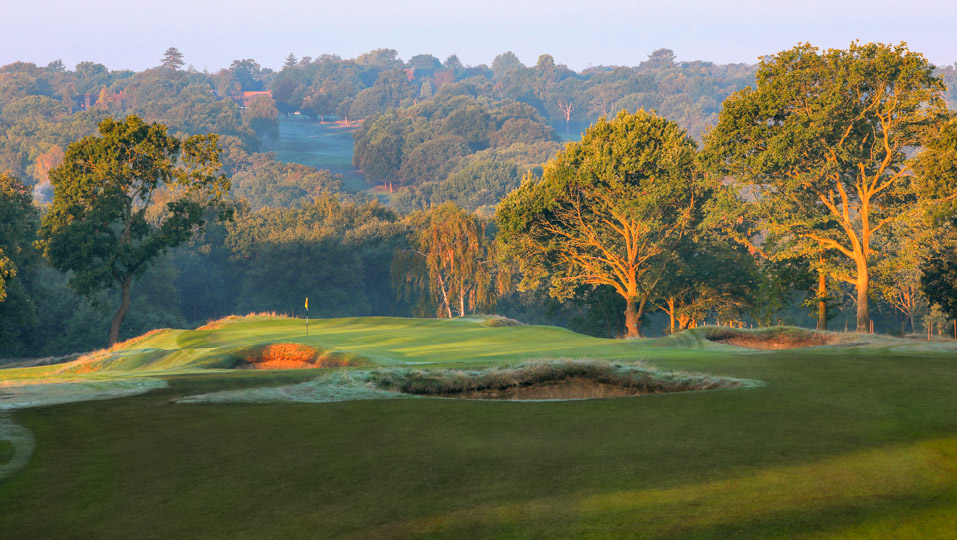
The 11th at Royal St. David's (photo courtesy of Brandon Tucker/WorldGolf.com)

Welsh Golf Exceeds the Hype in Unexpected, Arthurian Ways

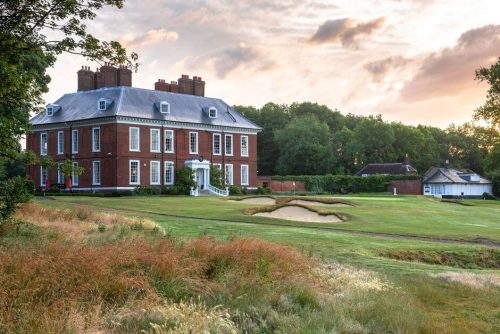
Royal St. David’s Golf Club and its singular Welsh backdrop, Harlech Castle

HARLECH, Wales (July 13, 2017) — The British Open is nearly underway and, while there are myriad reasons to visit the U.K. with your golf clubs, none of them have much to do with British Open venues. Look at Wales, located right next door to this year’s host, Royal Birkdale — to all of England, if we’re honest.The R&A has never staged The Open over this border. Still, the golf up and down the northwestern Welsh coast is outstanding. Welsh golf along the south coast ((Royal Porthcawl, Southerndown, Pennard) is even better.

What’s more, when you venture into this section of the British Isles, you experience a region so remote, so removed from modern resort and tournament conventions, that a golf journey there feels almost Arthurian.

A hefty chunk of the King Arthur legend is Welsh, drawn from early poetic sources such as Y Gododdin. Like the Welsh language itself, theses texts pre-date Roman Britain, much less Christianity. The Druids, the UK’s pre-Christian priestly class, considered the Welsh island of Anglesey sacred. This ancient, mystical aura continues to pervade the country’s dark hollows, its untamed coastline, even its trees. The Celts thought them sacred, you know.

I’m a voracious fan of the historical novelist Bernard Cornwell, whose Arthurian trilogy, The Warlord Chronicles (comprising The Winter King, Enemy of God and Excalibur) were all published about during mid-1990s. Taken together, they represent the best, most accurate and compelling take on the Arthurian tales — and much of the three-book saga takes place in Wales.

Indeed, they made a movie loosely based on Cornwell’s Warlord Chronicles, in 2004 Alas, the film — titled “King Arthur” and starting Clive Owen and Keira Knightly — proved middling at best. But they filmed all the castle scenes in Harlech.

Welsh Golf: Where Worlds Collide

Here’s an example of how this ancient world and the modern golfing world can interact in the UK’s least heralded golf destination:

About 15 years ago my girlfriend, Sharon, who would later become my wife, and I went to visit friends in Market Drayton, Shropshire, just over the Welsh border, in England, and not far from Birmingham. I was there on assignment, writing a travel piece about “where to play in the Midlands” while attending the 1995 Ryder Cup.

We can see what sort of long-term promotional effect that story had: To this day, no one talks about Edgbaston, Beau Desert or Hawkstone Park.

Anyway, we decided to head west a couple hours, over the Welsh border to seaside Harlech, home to Royal St. David’s Golf Club. I had written a letter to the club secretary requesting courtesy of the club (remember written, posted letters?). He had kindly obliged. We three arrived in coat and tie, ready for an audience and perhaps a drink in the bar before teeing off.

Ahead of our game, however, we stashed our clubs in the boot and walked a few hundred meters up the hill from RSDGC to Harlech Castle, which overlooks the course, the town and the entire countryside. Built by King Edward I during his late-thirteenth century conquest of Wales, it served as de facto capital of an independent Wales between 1404 and 1409. That’s when was held by Owain Glyndwr, the last native Welshman to hold the title Prince of Wales.

Try doing something like that within walking distance at Royal St. George’s.

Impressing the Club Secretary

Sharon was a pretty rank novice back then. She had her own clubs and arrived at the club looking pretty darned smart in a turtleneck and one of my vintage sport jackets with the sleeves rolled up (remember the ‘90s?). Still, the club secretary was dubious. I don’t know whether he suspected her inexperience (none of us were asked to present handicap cards), or he was merely a mild sexist when it came to lassie guests playing his course.

Whatever the case, he followed us to the first tee to witness our opening drives. I’m not sure who was made more nervous by this “gesture,” Sharon or myself — but she proceeded to drill one right down the middle, about 210 yards, and off we went. Come to think of it, that may have been the day I decided she was the one.

In any case, Royal St. David’s was and remains fairly sublime. The opening holes are a bit ordinary and flattish, hidden as they are behind (and not amid) the giant dunes at seaside. But the back nine rollicks through some truly extraordinary dunesland. Great stuff.

Welsh Golf doesn’t have to be — some would argue that it shouldn’t be — about resorts and tourism initiatives and tournament-enabled marketing synergies. It’s about watching your future wife stripe one, after mingling with the spirits of rebel kings and pre-Christian sorcerers in a real, live castle. Not to belabor the point, but they ain’t doing that at Birkdale.

The 11th at Royal St. David’s (photo courtesy of Brandon Tucker)

Coats, Ties and Foursomes: UK College Golf in the ’80s was a Breed Apart

Coats, Ties and Foursomes: UK College Golf in the ’80s was a Breed Apart

SUGAR GROVE, Ill. (May 5, 2017) — For all the trans-Atlantic DNA we share with our British cousins, it’s easy and, I daresay, natural to assume that UK college golf is pretty much a comp for the exercise here in the U.S. Not so. Not today, not forty years ago when I played for the University of London.

Today, top players from the U.K. (and mainland Europe) routinely travel stateside to hone their games at American colleges and universities. At scale, this “study abroad” drains the bBritish collegiate game of talent, obviously. Indeed, many of these men, women and their games will be on display here later this month (May 19-31) at Rich Harvest GC, site of the 2017 NCAA Championships.

But why do they make this trip in such appreciable numbers? Because collegiate golf in the U.K. — like all college sports there — is decidedly low-key, even compared to the low-stakes Division III golf I played at Wesleyan University in Middletown, Conn., during the early 1980s.

For my money, however, one can place UK college golf alongside proper ale and period cinema as something the Brits still do better, with more nuance and panache. Yes, our universities turn out more tour professionals, but for the majority of college golfers, in both countries, that’s not the point. It’s about competition and its sensible integration with the game’s social niceties — and no one does that better than the British upper crust.

That posh ethos dominated my university golfing experience abroad: Coats and ties, foursomes in the morning, singles in the afternoon, and no less than two proper English piss-ups sandwiched between them. You can have your vans, your matching shirts and golf bags. To Yanks, collegiate golf in the U.K. may look and feel more like a club sport. Having played both sides of this fence, I’ll go with the Pommies.

UK College Golf: No Vans

At mighty Wesleyan, a perennial golfing doormat, the exercise during the ‘80s remains recognizable: Throw on a pair of khakis and a golf shirt; pile into a van and meet a different college team, or two, at the course venue. We’d play 18 holes of medal, shake hands, tally up the scores, pile back into the van and drive home to campus. Big-time Division I golf schools don’t play many dual or tri-matches like these any more, I understand. More often they play various invitational tournaments whereby dozens of schools show up in one place, seven guys from each team play medal, and the best 5 scores count. We did this, too, though only once or twice a season.

Collegiate golf in England during the mid-1980s, when I played for the University of London, was nothing like this. Nothing. For starters, and perhaps most important, we rarely played other schools. Instead, university teams were hosted by golf clubs themselves, which trotted out their best players for a day of intergenerational match play and assorted reverie. Here’s a typical match-day regimen:

Put on coat and tie, pack some golf clothes in your golf bag and hump it to the nearest Underground station. Yes, we all got ourselves to the golf course, somehow — by bus or subway or some teammate’s car. We played a lot of matches in Greater London, at places like Roehampton and Royal Wimbledon, and I fondly remember riding the Tube with my golf clubs in tow.

Having arrived at the club, we would literally partake of tea, crumpets and scones with our opponents. As with most British golfing clubs back then, coat and tie were mandatory in the clubhouse, hence the need to dress for breakfast. The University of London Golf Team never once faced another school the entire semester I participated. We played the top 7 amateurs at various clubs who had deigned to host us for a day of matches. They were damned good players, as you might imagine, and they took great delight in showing off their home courses and, more often than not, kicking our asses around them.

The 13th at Royal Wimbeldon GC.

Thirty-six holes, Two Outfits

Our first change of address took place in short order, after tea. We’d slip into golf attire and head out for 18 holes of foursomes, or alternate-shot, at match play. This was great fun but very, very difficult. We typically see this format only in the Ryder Cup or President’s Cup contexts. Even then, a world-class professional, if just a bit off his game, can make life truly miserable for his partner. Just imagine teaming with a 7 handicap who’s probably hung-over, hasn’t picked up a club since the last match two weeks prior, and is seeing some course for the very first time.

Ater this first match, we’d change back into coat and tie for lunch. There were matches where we convened for casual buffets “at luncheon,” but more often than not these were grand affairs: four-course meals with elaborate place settings replete with wine, port and various toasts (read: shots of whiskey). If we students had fared well in the morning, the object of our hosts was mainly to get us as drunk as possible in preparation for…

Afternoon singles. Having changed back into golfing attire, we played 18 holes of singles, at match-play, of course. Depending on the luncheon miniseries, these could be quite entertaining affairs.

To complete the golfing day, one more costume chjange — back into coat and tie so as to hang around the clubhouse bar drinking pints of properly pulled ale with our new, middle-aged friends. Sometimes there were “antics”. At Roehampton (or Royal Wimbledon; I can’t remember which), someone suggested a 1-club tournament, whereby we went back out onto the course, at dusk, still dressed like Harry Vardon, pint in hand, to play a short loop of holes using but a single club. Great fun. I recall choosing a persimmon 4-wood. Remember them?

I honestly couldn’t tell you the first thing about whether we won, lost or drew any of these overall matches against the golf club teams. First of all, from a team perspective, I don’t think it mattered to anyone all that much; second, by the end of these marathon golfing days, I was far too drunk to give a fig.

The Semester’s Final Match

Oldest club in England
Royal Blackheath GC

I do remember well my last match before heading home to America, however. It was played at Royal Blackheath, which, if memory serves, is the oldest golf club in England, i.e. south of the Scottish border. We had arranged this match because a fellow on our team has been a member there growing up. He arranged it and, for him, the exercise prove equal parts homecoming, competition and piss-up.

Luncheon had been a complete free-for-all. Some two hours of eating and drinking had finally given way to the singles matches. Our Blackheath alum went out first against one of his oldest friends, while I — because it was my last match before going home, back across the pond — was given the honor of going out last vs. the club captain. He was 50-something fellow who kept offering sips from his flask all along the outward nine. I politely declined; I was plenty buzzed from lunch and wanted to win my swan song. On 12, I went 3 up and we set about finishing his brandy together.

When we arrived at the tee box serving the par-3 15th, our match nearly decided, we came upon the first group. They had decided to park themselves on a bench, wave everyone through, and concentrate on their drinking, reminiscing and needling. In the three years of college golf I played at Wesleyan, the idea that my opponent and I might blow off or otherwise back-burner our match in favor camaraderie like this? Never have occurred to us. Pity, that.

As we gathered in the clubhouse bar that evening, my teammates — in honor of my pending departure — presented me with a formal and quite stylized summary of the day’s results, complete with my skunking during the morning foursomes and my full point (!) from the singles. I’ve just gone and consulted this document in a scrapbook I keep. It was a touching gesture…

The fact that someone like me — an American, but really just a guy who showed up entirely unannounced, for a single semester — could join the golf team, compete in 5 or 6 matches, and be so thoroughly welcomed, then bade such a fond farewell. It speaks both to the informality of the collegiate golf exercise as it existed in England back then and to the oft-maligned English social character. Yes, they can be a bit stand-offish at first but once they let you in, perhaps with the aid of proper lubrication), they are great fun, quite warm and perhaps more prone to overt sentiment than we Yanks.

I don’t honestly remember how I got home from Royal Blackheath that night. My last concrete memory is playing snooker with several guys in the club’s ornate billiard room, a vast mahogany-paneled expanse beneath impossibly high, pressed-tin ceilings. cloud of cigarette and cigar smoke settled over the tables. Every once in a while, people find out I played college golf in England. They often ask, “So, what was that like?”

In a word, exhausting.